GPT Isolation Gaskets – Matching to the Pipe Bore
Guide to understanding sizing for GPT Isolation Gaskets. A standard in gasket design for GPT is to match the gasket inside diameter (ID) to the pipe bore that the gasket is being put into.
A standard in gasket design for GPT is to match the gasket inside diameter (ID) to the pipe bore that the gasket is being put into. This is the appropriate sizing for most GPT gaskets.

GPT Isolation Gaskets
The flange bore will directly depend on how the flange connects to the pipe, and in general there are two ways – Weld Neck and Slip-On. Weld Neck typically means the flange is butt-welded to the pipe and in this case the flange bore will match that of the pipe bore. Slip-On means the flange is designed to slip over the outside of the pipe where it is then welded in place and therefore the flange bore will be slightly bigger than the outside diameter (OD) of the pipe. Knowing the type of flange is the first step to understanding the ID of the gasket needed. The goal is for the gasket ID to match the flange bore.
For a given nominal pipe size, the OD of the pipe does not change, but the pipe schedule changes and is related to the wall thickness (WT). The larger the schedule the ticker the pipe e.g. SCH 10 is thinner than SCH 80.
The gasket ID with a slip-on flange will be slightly bigger than the standard OD of a given nominal pipe size. For a weld-neck flange, the flange bore is the same as the pipe bore.
Wrong Sizing Leads to Corrosion & Erosion

It is important to understand why the gasket ID is required to be equal to the flange bore. For example, if the gasket ID was sized larger than the flange ID, the flange face and isolation would be at an increased risk as there would be a void between the two flanges causing increased turbulent flows of media. This increased turbulence can lead to crevice corrosion. There would also be an increased risk of unwanted media build ups in the void which could cause an electrical bridge shorting the path of isolation.
If the gasket were to be sized smaller than the flange ID, then the gasket would be protruding into the pipe, there is a risk of the sealing element landing inside the flange bore and not sealing against the flange face. The gasket would also be in the direct path of the media and pigs (both the pig and the gasket could be damaged). This situation again would cause increased turbulent flow leading to corrosion and erosion.
In the case of matching two flange faces with different bores, GPT best practice is to match the gasket ID with the larger flange bore.
In summary, matching the gasket ID to pipe bore is the effective way to mitigate corrosion and maintain electrical isolation.
The KERR team is available for presentations, lunch and learns and customer visits.
We at Kerr Engineered Sales Company know how important it is for operators to prevent corrosion and erosion when making purchase decisions and operating equipment. Kerr has been representing leading pipeline repair and performance companies in Eastern US since the company was founded in 1952. Seventy one years later, the company is still a family run business serving customers with the highest quality service and support.
GPT EVOLUTION® Isolation Gasket Redesigned
Improved gasket has a tougher coating and sleek design delivers unprecedented resistance to leakage and flange corrosion with the highest levels of fire safety and isolation.
Maintaining pipeline integrity and keeping emissions in check has never been more important.

The GPT Evolution gasket is improved with a tougher coating and sleek design without a handle. GPT laser etches directly onto this coating; the coating thickness has been doubled to avoid the risk of holidays.
The Evolution® is a fully-encapsulated isolation gasket that delivers the impermeable performance needed to prepare any flange for the increasing risks found in today’s oil and gas industry. The thinner, 1/8” (3mm) design minimizes the difficulties often encountered while attempting to install thicker isolating gaskets. Total encapsulation allows the gasket to be hydro-tested and kept in the pipeline with virtually no loss in isolation properties. No more permeation issues or chemical attacks that plagues GRE gaskets. This innovative gasket is coated using a GPT proprietary material designed specifically for the oil and gas industry that is extremely abrasion and impact resistant.
The new look Evolution gaskets have the revolutionary materials and design providing industry-leading resistance to leakage and flange corrosion, as well as unprecedented levels of fire safety and isolation.
GPT will supply a tag with the size/class/schedule/product style with lot # and part # with each gasket. A “zip tie” is included to connect the tag to the sleeve or flange nut. The external ability to identify the type, size and class of gasket contained within the flange is popular. GPT will continue this benefit with the handle free version of Evolution.
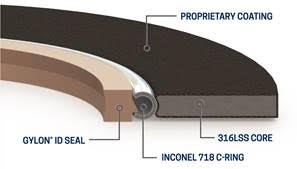
GPT Evolution Gasket
Product Highlights
Passed API 6FB fire testing in multiple sizes and pressure classes and has a considerable increase in operating temperature over GRE products
Revolutionary materials and design provides industry-leading resistance to leakage and flange corrosion, as well as unprecedented levels of fire safety
Rated to 500°F (260°C)*, EVOLUTION® can also operate under high temperatures
GPT EVOLUTION® Isolation Gasket
A new standard for the future of gasketing available from GPT Industries and Kerr Engineered Sales. Conditions are changing. As we drill deeper and utilize enhanced recovery methods such as thermal and CO2 injection, we are exposing the products in our pipelines to greater concentrations of harsh chemicals, higher temperatures and higher pressures. Maintaining pipeline integrity and keeping emissions in check has never been more important. Yet, traditional pipeline materials, including gaskets and seals, are not always up to the challenge.

Maintaining pipeline integrity and keeping emissions in check has never been more important.
As we drill deeper and utilize enhanced recovery methods such as thermal and CO2 injection, we are exposing the products in our pipelines to greater concentrations of harsh chemicals, higher temperatures and higher pressures. Traditional pipeline materials, including gaskets and seals, are not always up to the challenge.
The Evolution® is a fully-encapsulated isolation gasket that delivers the impermeable performance needed to prepare any flange for the increasing risks found in today’s oil and gas industry. The thinner, 1/8” (3mm) design minimizes the difficulties often encountered while attempting to install thicker isolating gaskets. The total encapsulation allows the gasket to be hydro-tested and kept in the pipeline with virtually no loss in isolation properties. No longer do you have the permeation issues or chemical attack that plagues GRE gaskets. This innovative gasket is coated using a GPT proprietary material designed specifically for the oil and gas industry that is extremely abrasion and impact resistant.
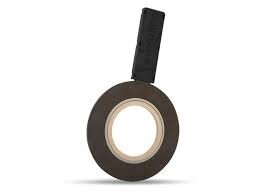
GPT Evolution Gasket
Product Highlights
Passed API 6FB fire testing in multiple sizes and pressure classes and has a considerable increase in operating temperature over GRE products
Revolutionary materials and design provides industry-leading resistance to leakage and flange corrosion, as well as unprecedented levels of fire safety
Rated to 500°F (260°C)*, EVOLUTION® can also operate under high temperatures