
An Emergency Repair Keeps Gas Flowing
When a smart pig in-line inspection identified severe corrosion on a 20-inch high-pressure natural gas pipeline, the utility turned to Daryl Smith to coordinate an emergency repair.
How Kerr Engineered Sales and T.D. Williamson helped an east coast utility isolate and replace a severely corroded section of 20-inch high-pressure pipeline in two weeks.

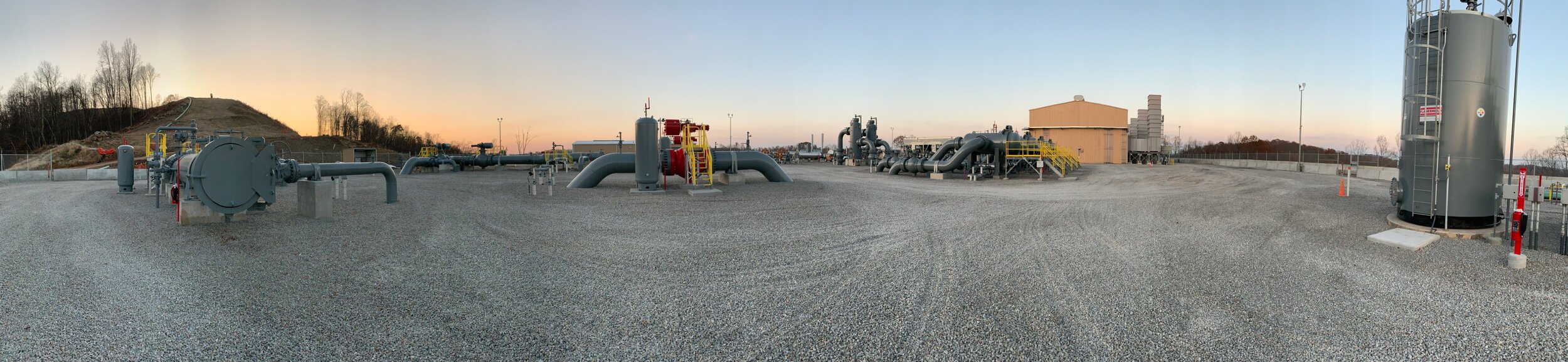
20-inch TDW double STOPPLE® Train in action
When a smart pig in-line inspection identified severe corrosion on a 20-inch high-pressure natural gas pipeline, the utility had to act fast. The amount of corrosion was a serious integrity concern, requiring an emergency repair.
The Solution
The utility turned to Daryl Smith, Sr. Application Specialist from Kerr Engineered Sales. Daryl put an emergency project into motion to replace the corroded section of a carbon steel pipeline in an extremely tight timeline. The project had to be executed in multiple sites without interruption of gas service.
KERR and TDW developed a repair plan using a 20-inch double STOPPLE® Train double block and bleed solution with a full bypass. Daryl rapidly secured the needed double STOPPLE® Train isolation equipment, fittings, and completion plugs. Technical support was fast tracked. After schedules were rearranged, a TDW technician was onsite within days.
With the pipeline in service, crews installed fittings and valves and performed hot taps at multiple locations. The double STOPPLE® Train system was then used to isolate the affected section of pipeline while the temporary bypass maintained gas flow.
Complicated Bend
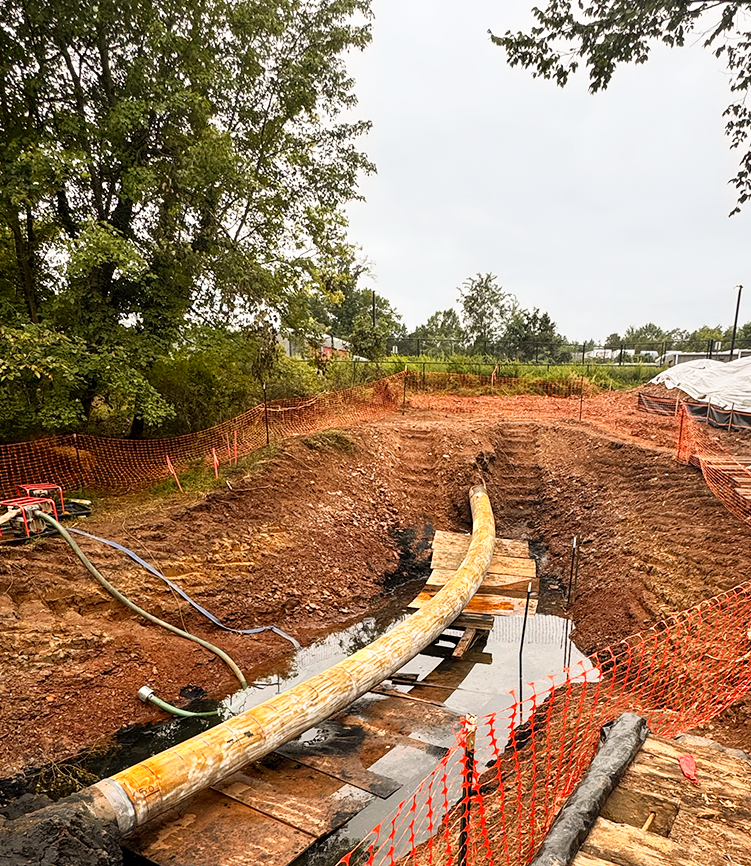
A bend in the pipeline added a challenge
One section of approximately 30-feet included a bend, complicating the project. This added a challenge to the repair and required careful planning and execution to safely remove and replace the affected section. A temporary bypass maintained gas flow while the damaged pipe and bends were removed and replaced.
The Result
Once the corroded section was replaced at every site, the isolation equipment was removed and the pipeline was safely restored to normal operation. The emergency repair was completed within the two week deadline while gas flowed. A combination of rapid equipment mobilization, technical expertise, and coordinated field execution allowed the utility to address a serious pipeline integrity issue quickly while maintaining service throughout the repair.
Due to highly skilled crews and fast acting support, the elevated risks associated with a severely corroded pipeline were averted.
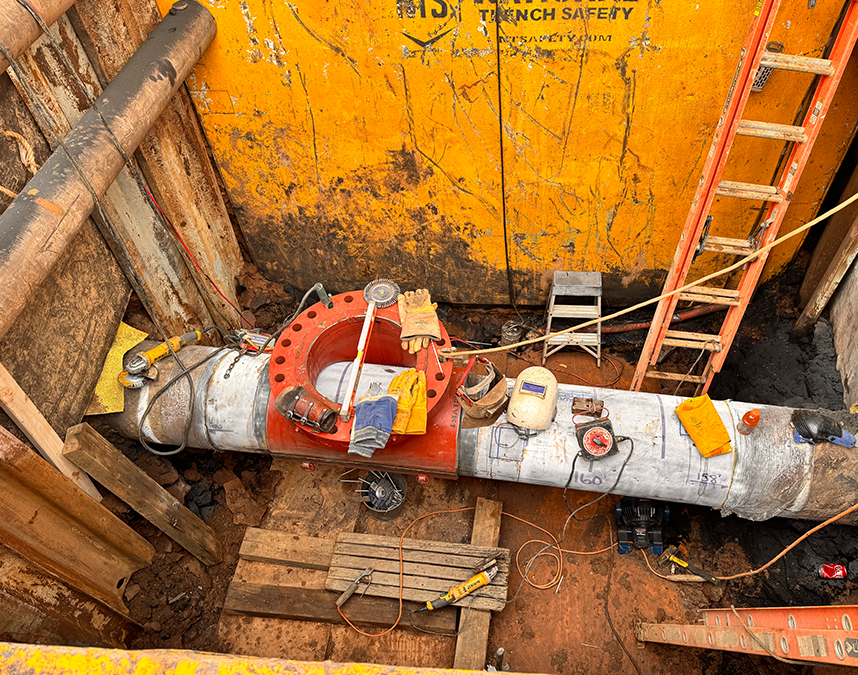
Preparations for the double STOPPLE® Train double block and bleed
Kerr Engineered Sales Company has represented leading pipeline repair and performance companies in Eastern U.S. since the company was founded in 1952. Today, 74 years later, KERR remains a family business providing gas utilities with equipment, technical expertise, and field support for challenging pipeline operations.
The team of Application Specialists at Kerr Engineered Sales Company is available for technical presentations, product demonstrations, and onsite visits.

V-Jet Pig: Combatting Corrosion
TDW V-Jet® Corrosion Inhibitor Pig was engineered to address the challenge of Top of Line Corrosion. the V-Jet® pig takes a direct and efficient approach of redistributing inhibitor fluid where it’s needed most.
TDW PIGGING INSIGHTS - Episode 7
Top-of-line corrosion (TLC) remains a persistent issue in natural gas pipelines. By its nature, TLC is difficult to control because corrosion inhibitors tend to settle along the bottom of the pipe, leaving the uppermost portion of the pipe wall exposed and vulnerable. Over time, this uneven protection can lead to accelerated internal corrosion, integrity concerns, and increased maintenance costs.
How it Works: The TDW V-Jet® Pig
The TDW V-Jet® Corrosion Inhibitor Pig was engineered to address the challenge of TLC. Instead of relying on traditional methods that struggle to reach the top of the pipe, the V-Jet® pig takes a more direct and efficient approach by redistributing inhibitor fluid where it’s needed most.
The V-Jet® design is a series of strategically placed spray nozzles integrated into the scraper body. As the pig travels through the pipeline:
Corrosion inhibitor that has pooled at the bottom of the pipe is drawn into the pig through inlet ports
The system uses differential pressure to propel the pig forward
That same pressure is leveraged to redirect inhibitor fluid through the internal spray system
The inhibitor is then projected upward, coating the top of the pipe wall
This process is enhanced by a venturi effect created by the pig’s bypass design. The bypass flow acts as an accelerant, helping atomize and distribute the inhibitor more effectively across the upper internal surface.
Engineered for Simplicity and Reliability
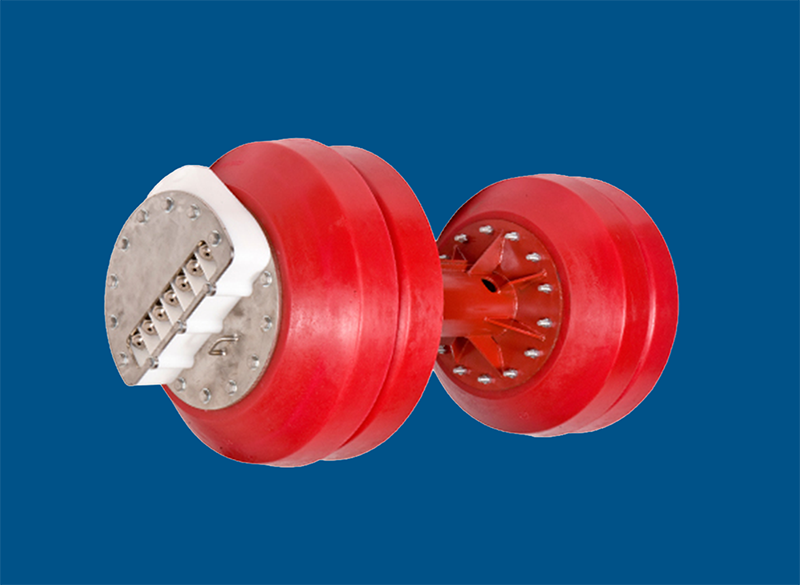
TDW V-Jet® Corrosion Inhibitor Pig
One of the strengths of the V-Jet® pig is its straightforward, field-proven design:
No moving parts
No onboard pressure vessels
No need for pre-charging or complex setup
That simplicity translates to reliability in the field and reduces operational complications during pigging runs.
The ability to consistently deliver corrosion inhibitors to the top of the line is a significant step forward in managing internal corrosion. The V-Jet® pig provides a practical, cost-effective way to improve inhibitor distribution without adding unnecessary complexity to operations.
Bottom Line
With the right tools, TLC can be managed effectively. The TDW V-Jet® Corrosion Inhibitor Pig offers a proven method to enhance protection where traditional approaches fall short.
To learn more about the TDW V-Jet® Corrosion Inhibitor Pig or to discuss your application, contact the KERR team.
The team of Application Specialists at Kerr Engineered Sales Company is available for presentations, product demonstrations, lunch and learns and customer visits.
TIPS TO CONSIDER WHEN PURCHASING CLOSURES
When selecting Closures, pipeline operators should consider safety and performance factors. The TDW D2000 Closures with the ProSeries™ Advantage is the safest, most trusted closure on the market.
“Imitation is the sincerest form of flattery that mediocrity can pay to greatness.”
Don’t compromise safety and performance by settling for imitations. When it comes to closures, cutting corners isn’t an option. The safety of your crews, the integrity of your pipeline, and the efficiency of your operation all hinge on choosing the right product.
TDW’s D2000 ProSeries closures are backed by more than 100 years of engineering expertise, field experience, and continuous innovation.
When you invest in the D2000 ProSeries, you’re not just buying a closure—you’re choosing the best-in-class solution backed by a manufacturer who will be here for the lifetime of your pipeline.
the manufacturer
Proven track record – Does the manufacturer have decades of field-proven reliability, or are they new to the market? TDW closures have been rigorously tested and trusted by operators worldwide for generations.
Life cycle support – A closure is only as good as its support. Look at availability of parts, repair services, and consumables like O-rings and Pressure Warning Locks (PWLs). TDW ensures long-term support for every component.
See the D2000 Closure in action
SAFETY FIRST

The primary question: Does the design keep the operator out of the danger zone?
Operator positioning – With the D2000, operators can safely open the closure from outside the direct line of danger.
Pressure Warning Locks – Placement matters. PWLs located in the 12 o’clock position are less likely to collect debris than those on the door face. The D2000 design directs any retained pressure safely away from the operator.

Durability and spares – Unlike metal-to-metal seals that wear out quickly, TDW’s PWLs are supported with readily available O-rings and replacement parts, ensuring reliability and uptime.
Design AND FEATURES that matter
Simplicity of operation – Fewer moving parts mean fewer failure points and easier maintenance.
Ease of alignment – A single pivot point makes aligning the door with the collar straightforward and efficient.
Clamping surface design – Closures with parallel, non-wedging clamp-rings eliminate force transfer to holding components, reducing wear compared to tapered, wedging surfaces.
O-Ring LOCATION and performance
Sealing performance is critical, and O-ring placement makes a big difference.

Protected placement – O-rings positioned on the external outer edge of the collar are less likely to be damaged during pig loading or removal, and they’re better protected from debris.
Leak prevention – Properly compressed O-rings perform even at low pressure, reducing leak risks.
Material options – TDW offers multiple O-ring materials to suit varying operating conditions, giving operators flexibility and reliability.
TDW closures are there for the lifetime of your pipeline.
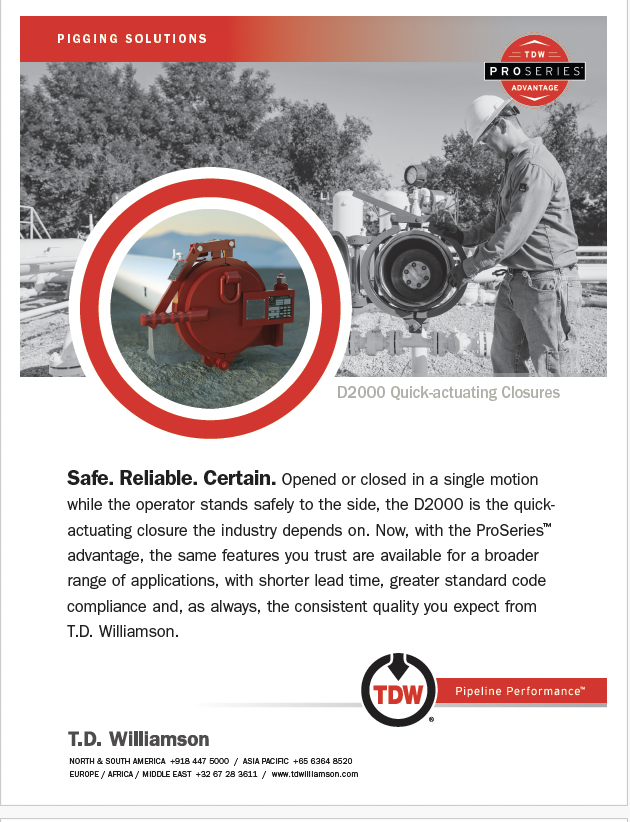
DOWNLOAD CLOSURE BROCHURE
At Kerr Engineered Sales Company, we know closures inside and out. For over 73 years, we’ve been helping operators make the right decisions for pipeline safety and efficiency. As TDW’s representative since 1952, we stand firmly behind their products and their commitment to excellence.
TDW FIRSTS: ISOLATION TOOLS & FITTINGS IN ACTION
To help a customer isolate a section of a gas pipeline being upgraded and replaced, TDW employed three new applications of its technology, along with the first use of ZEVAC® cross-compression equipment.
To help a customer isolate a section of a gas pipeline being upgraded and replaced, TDW employed three new applications of its technology, along with the first use of ZEVAC® cross-compression equipment.

Isolating the Lines

TDW ProStopp® DS Isolation Tool
An East Coast gas company needed to replace a section of bare steel pipe as part of their infrastructure upgrade program. They were also installing a new gas regulator station on the same project. The 3,200 foot section of 16” and 10” pipeline, needed to be replaced without shutting off service to any customers.
TDW recommended the use of Spherical 3-WAY Tees at both locations. With Stops set thru the Spherical Tees, the line could be isolated while gas was still allowed to travel thru the system thru the new permanent bypass that was welded between the outlet of the two spherical tees.
To isolate the section of pipe, TDW technicians deployed a 16” STOPPLE® Train, a patented system designed to isolate sections of pipeline for maintenance or repairs while the line remains in service. The STOPPLE® Train Isolation Machine uses double block and bleed technology, featuring two Sealing Cups with a bleed port between to ensure secure isolation.
For isolating the 10-inch line, TDW deployed the 10-inch ProStopp® DS Isolation Tool, which also uses double block and bleed technology with two hydraulically activated plugging heads.
Redirecting Gas Instead of Venting
Once the isolations were set on the 16-inch and 10-inch lines, the trapped gas between the isolated sections needed to be removed so that the line could be cut and capped. Rather than venting the gas into the atmosphere the traditional method, TDW technicians utilized a ZEVAC® (Zero Emission Vacuum and Compressor) Quad to extract the gas from the isolated section and redirect it back into the existing 16-inch line.
Gas utilities implement cross-compression technology like ZEVAC for methane emissions reduction during live gas operations.

ZEVAC® extracts gas from the isolated section and redirects it into the 16-inch line.
After depressurizing the line, the team secured the area overnight. Upon returning, they verified that the isolation seals were intact, providing a 100% shut-off. With no gas remaining, the utility safely cut out the old section and welded end caps. This permanently rerouted gas thru the spherical tees and into the new section of pipe.
Conditioning the Line

TDW TOR 3-WAY Tee Bypass
Another TDW first on this project, TDW’s new 2-inch THREAD-O-RING™ (TOR) 3-WAY™ Tee was used to build a bypass line between the new and old pipelines. The utility did this two weeks before the isolation, when they were conditioning (pickling) the line. Once the STOPPLE and the ProStopp were set, the TOR 3-WAY Tee Bypass was employed as the suction and discharge point for the ZEVAC® machine during line conditioning.
When the bypass was no longer needed, the TOR 3-Way™ Tee was isolated using TDW’s new Temporary Isolation Plug (TIP). Used for the first time on site, the TIP allowed the utility to safely decommission the outlet on the TOR 3-Way Tee. After both lines were capped off, the TOR Plugs were set in the TOR fittings, enabling the utility to complete the fittings.
Results
This complex isolation project was completed on schedule, allowing the utility to safely install the sections of pipeline without shutting off service to any customers. The new TDW technologies utilized in this project included:
TDW 10-inch ProStopp® DS Isolation Tool
TDW 2-inch THREAD-O-RING™ (TOR) 3-WAY™ Tee
TDW Temporary Isolation Plug (TIP)
Additionally, TDW technicians effectively operated a ZEVAC® Quad cross-compression unit to redirect about 25,000 scf of gas back into the 16-inch line, effectively reducing the utility’s methane emissions. The collaboration between TDW’s isolation tools and ZEVAC® marked a successful first use of these combined technologies.

Our application specialists at Kerr Engineered Sales Company are available for demonstrations, team presentations, lunch and learns and site visits. We are here to help you optimize your gas utility operations and ensure the safety and efficiency of your equipment.
Kerr Engineered Sales Company has been representing leading pipeline repair and performance companies in Eastern US since the company was founded in 1952. Seventy three years later, KERR remains a family business delivering the highest quality service and expertise.