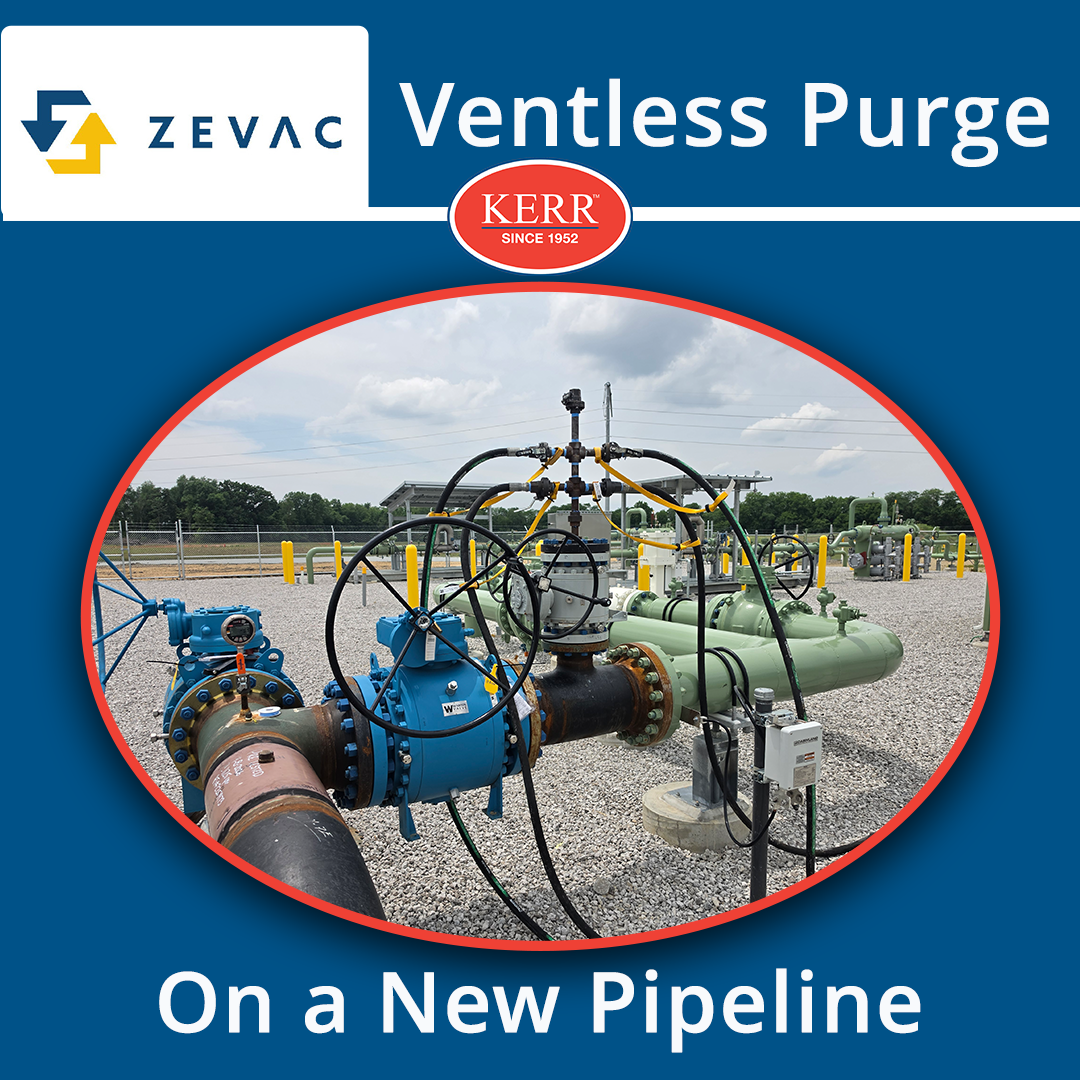
ZEVAC Ventless Purge on a New Pipeline
See how ZEVAC cross compression purged a five mile section of new construction pipeline without venting. Using compressed air as a vacuum, the pipeline was cleared and feed gas was introduced into the system the next day.
ZEVAC technology purged a 12" diameter new construction pipeline.
See how ZEVAC cross compression was used to do a ventless purge on five mile segment new pipe, using compressed air as a vacuum. Pipeline feed gas was introduced into the system the next day.
Instead of releasing gas to the atmosphere, ZEVAC helps utilities safely capture and manage natural gas in pipelines. The pneumatic (air) powered and controlled technology eliminates the noise, permits, notifications, hazards, and difficulties of venting and flaring.

ABOUT ZEVAC
From mobile gas evacuation units to fully customized equipment and field services, ZEVAC enables a closed-loop system of capturing, transferring, and reusing natural gas during pipeline operations. The methane mitigation equipment reduces product loss, minimizes costly service calls, and supports safer, more efficient maintenance across the gas distribution network.
Since 1952, Kerr Engineered Sales Company has represented leading pipeline and performance equipment manufacturers across the Eastern U.S. With four generations of family leadership, Kerr continues to serve the industry with the same commitment to quality, reliability, and personal service that has defined our company for more than 74 years.
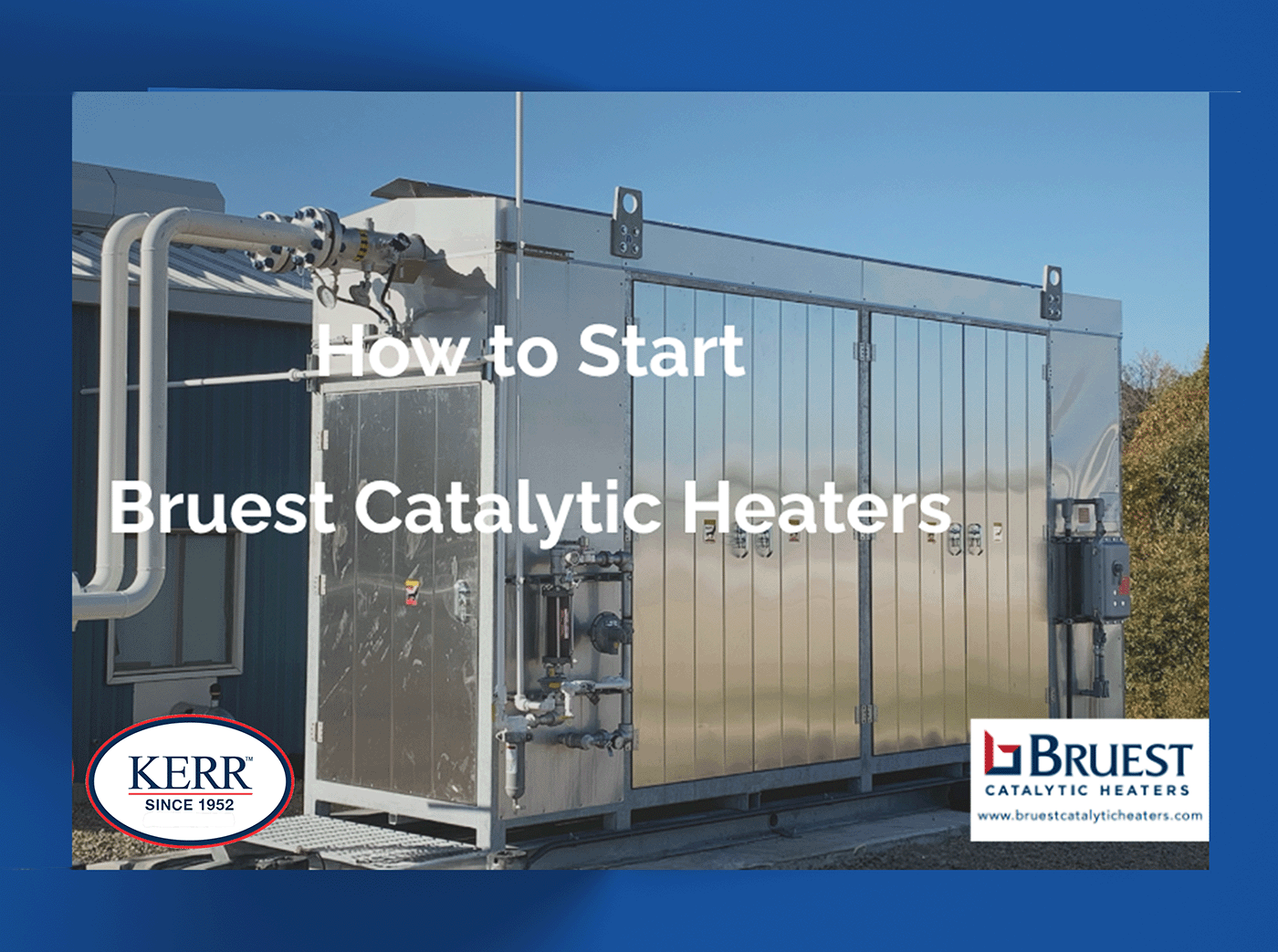
Video: Starting A Bruest Catalytic Heater
In cold weather, the gas industry turns to Bruest for cost-efficient heating systems to prevent freeze-ups in critical metering and regulating equipment. Our new video walks through the components, process and troubleshooting tips for starting a Bruest heater.
When temperatures drop, the natural gas industry turns to Bruest for cost-efficient heating systems to prevent freeze-ups in critical metering and regulating equipment. Catalytic technology delivers consistent heat with minimal maintenance.
Our new video walks through the process and includes troubleshooting tips for starting Bruest heaters.
The KERR team has decades of knowledge and hands-on expertise with catalytic heater operations and troubleshooting. Our Application Specialists work with you to commission new units or maintain systems that have been in service for decades.
We are here to ensure every heater operates safely and performs at optimal levels.
ABOUT BRUEST & RESOURCES
Bruest Catalytic Heaters are used wherever temperature control is critical, provide steady, flameless infrared heat to maintain proper operating temperatures in critical equipment. Built in Independence, Kansas, Bruest engineers and manufactures reliable, efficient, flameless heat across the entire natural gas network including:


Meter and regulator stations
Compressor buildings
Pipeline manifolds
Wellhead skids
Analyzer shelters and equipment enclosures

Download Operations Guide


Download Brochure
Since 1952, Kerr Engineered Sales Company has represented leading pipeline and performance equipment manufacturers across the Eastern U.S. With four generations of family leadership, Kerr continues to serve the industry with the same commitment to quality, reliability, and personal service that has defined our company for more than 74 years.
BRUEST CATALYTIC HEATERS KEEP GAS FLOWING
As temperatures drop, the natural gas industry turns to Bruest for cost-efficient heating systems to prevent freeze-ups in critical metering and regulating equipment. Engineered for efficiency and safety, catalytic technology delivers consistent heat with minimal maintenance.
When temperatures drop, the natural gas industry turns to Bruest for cost-efficient heating systems to prevent freeze-ups in critical metering and regulating equipment. Engineered for efficiency and safety, catalytic technology delivers consistent heat with minimal maintenance.
Built in Independence, Kansas, Bruest engineers and manufactures reliable, efficient, flameless heat across the entire natural gas network in metering and regulating stations, analyzer shelters, compressor buildings, and pipeline manifolds.
The KERR team has decades of knowledge and hands-on expertise with catalytic heater operations, troubleshooting and start ups. Whether commissioning new units or maintaining systems that have been in service for decades, our Application Specialists work with customers to ensure every heater operates safely and performs at optimal levels.

Thomas Kerr starting a catalytic heater at a Compressor Building in Eastern PA. The flameless heat maintains temperatures above 50 degrees.
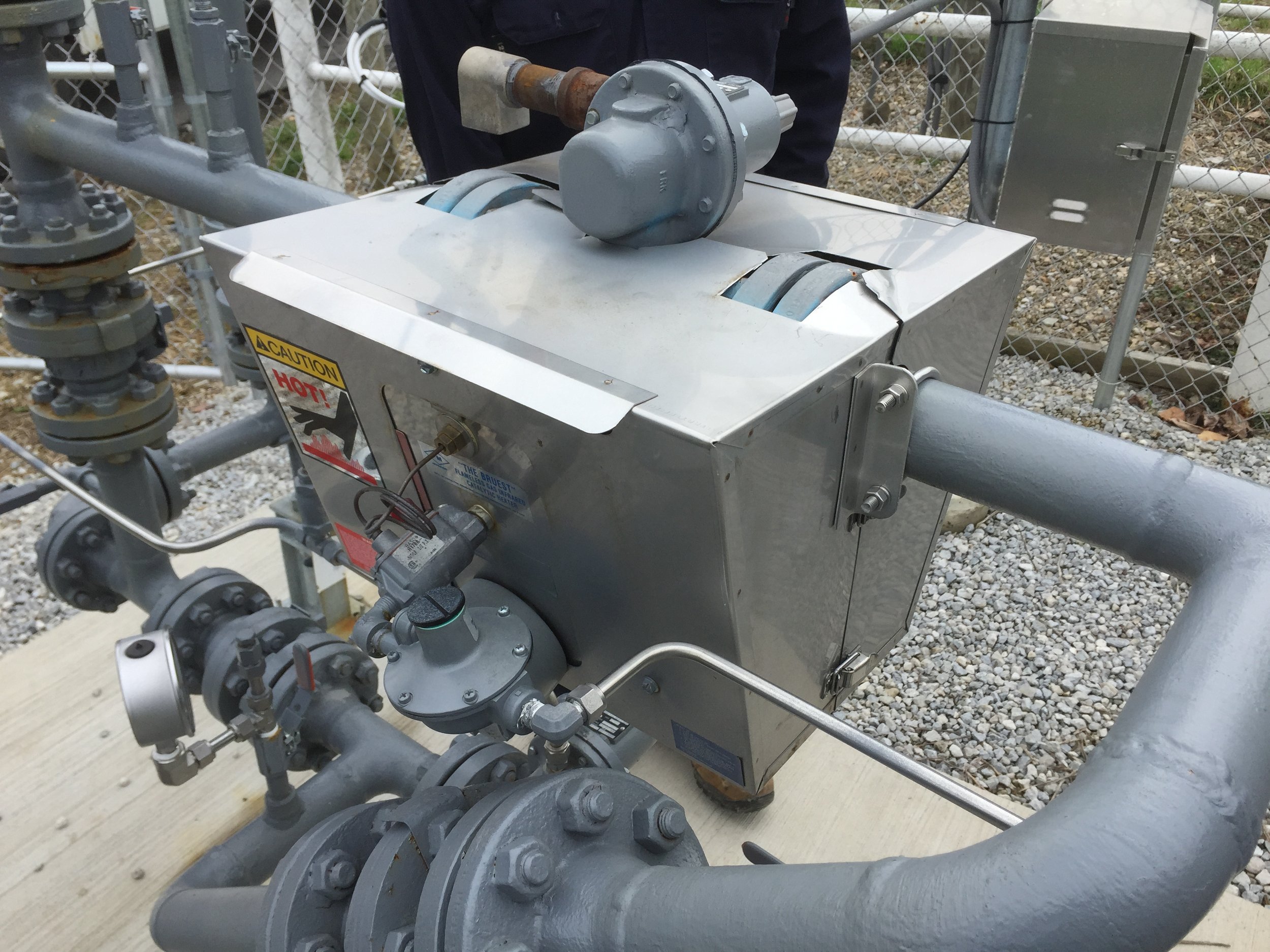
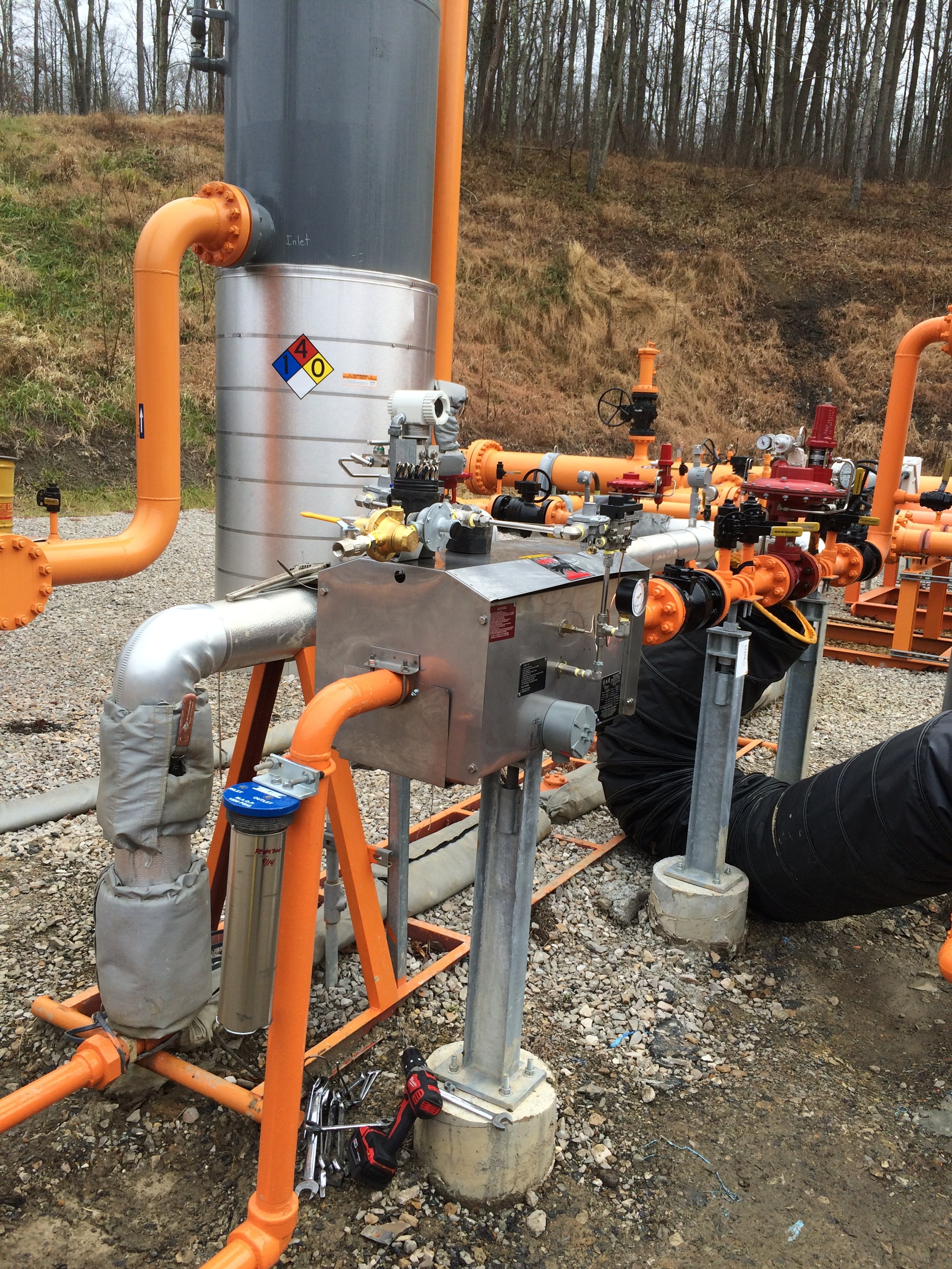
Freeze-FITER applied in front of an instrument preheats the gas

Thomas Kerr starting a Dual Coil Freez-FITER at a Compressor station
Bruest Catalytic Heaters are used wherever temperature control is critical, provide steady, flameless infrared heat to maintain proper operating temperatures in critical equipment.
Meter and regulator stations
Compressor buildings
Pipeline manifolds
Wellhead skids
Analyzer shelters and equipment enclosures
Catalytic Heater Fundamentals
Unlike conventional burners, catalytic heaters don’t rely on combustion. Instead, they use a catalytic reaction to release energy from natural gas or LPG at a much lower temperature—typically around 900°F (480°C) compared to the 1,200–1,400°F required for ignition. The result is safe, flameless infrared radiant heat—an exothermic chemical process that delivers steady warmth without sparks or smoke.

It’s not magic.. it’s an Exothermic chemical reaction.
DESIGNED FOR hazardous OR ENCLOSED ENVIRONMENTS

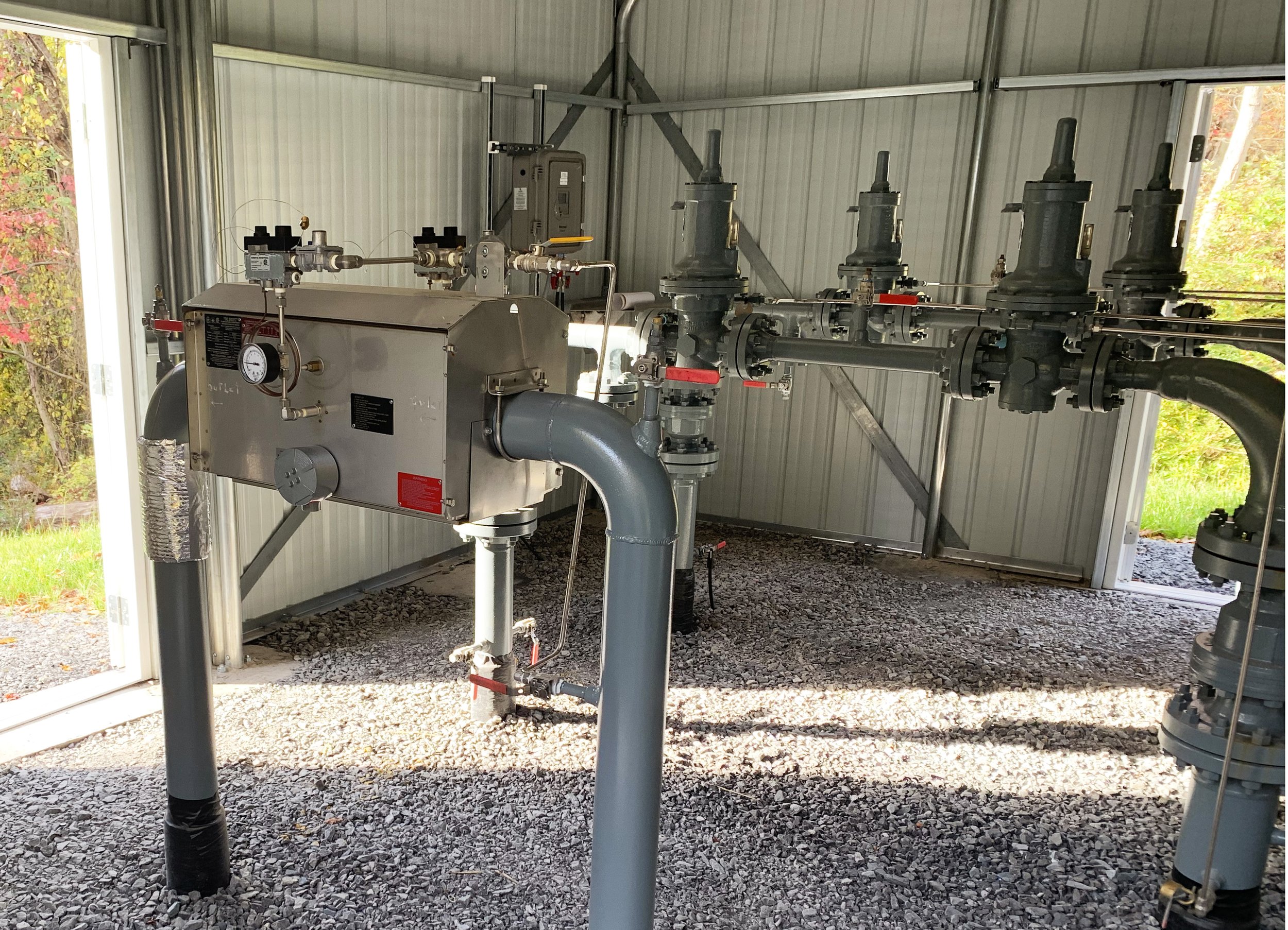
FREEZ-FITER with a Regulator
CSA Class I Div 1 or FM Class I Div 2
CSA and FM approvals for Class I, Division 1 and 2 locations
ATEX certification for European installations
Operates on natural gas or LPG
Catalytic Pads require little to no maintenance
No moving parts and minimal maintenance
Long service life with consistent, reliable output
HOTCAT LINE HEATERS
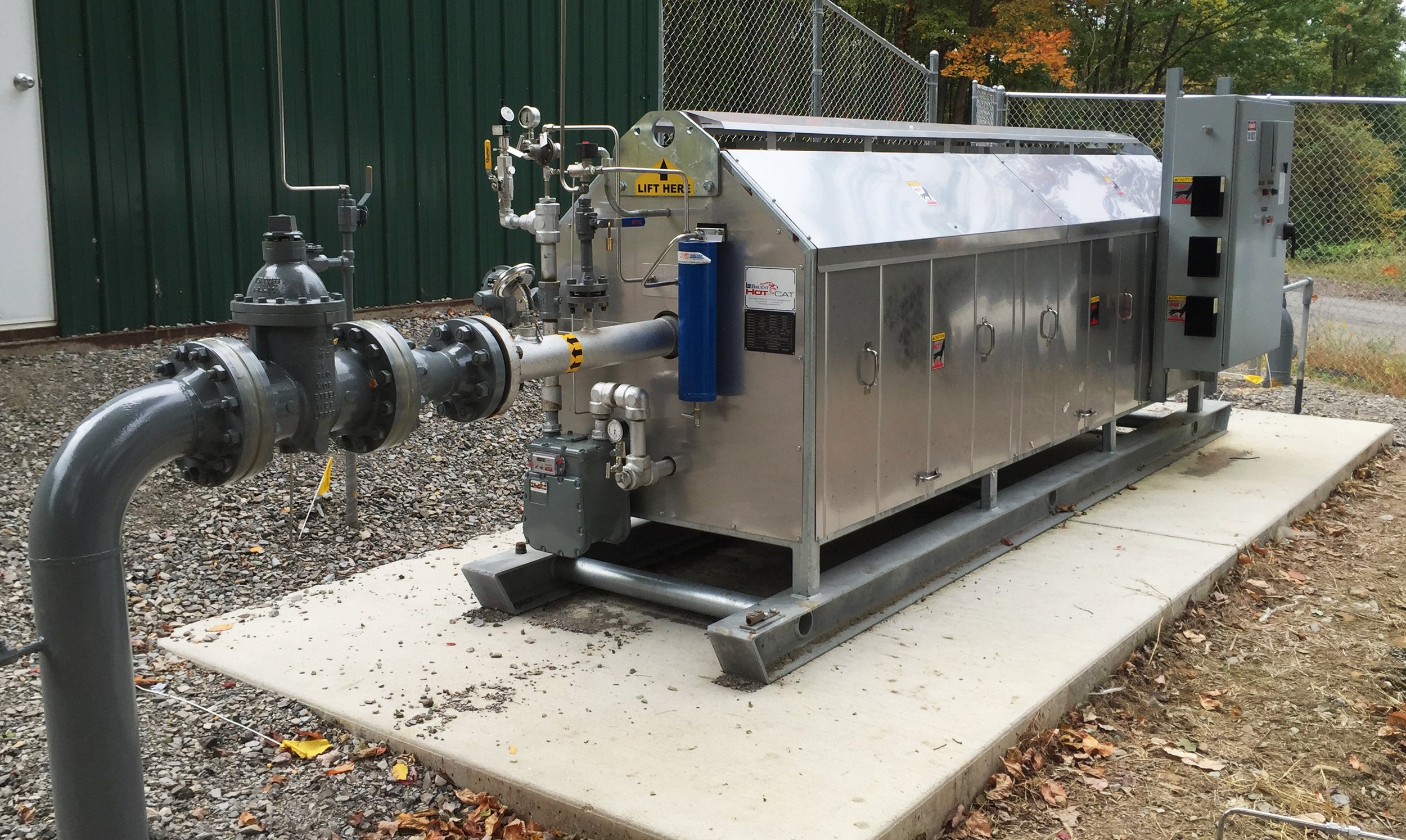
In HOTCAT natural gas line heaters, Bruest catalytic heater panels are the heat source. The catalytic heater panels convert the fuel gas to CO2, water vapor, and infrared heat with virtually no NOx. The process begins by preheating of the catalyst with electric power. Once the catalyst is preheated, fuel gas can be introduced to complete the startup. Manual or automated control systems are available for different application requirements.
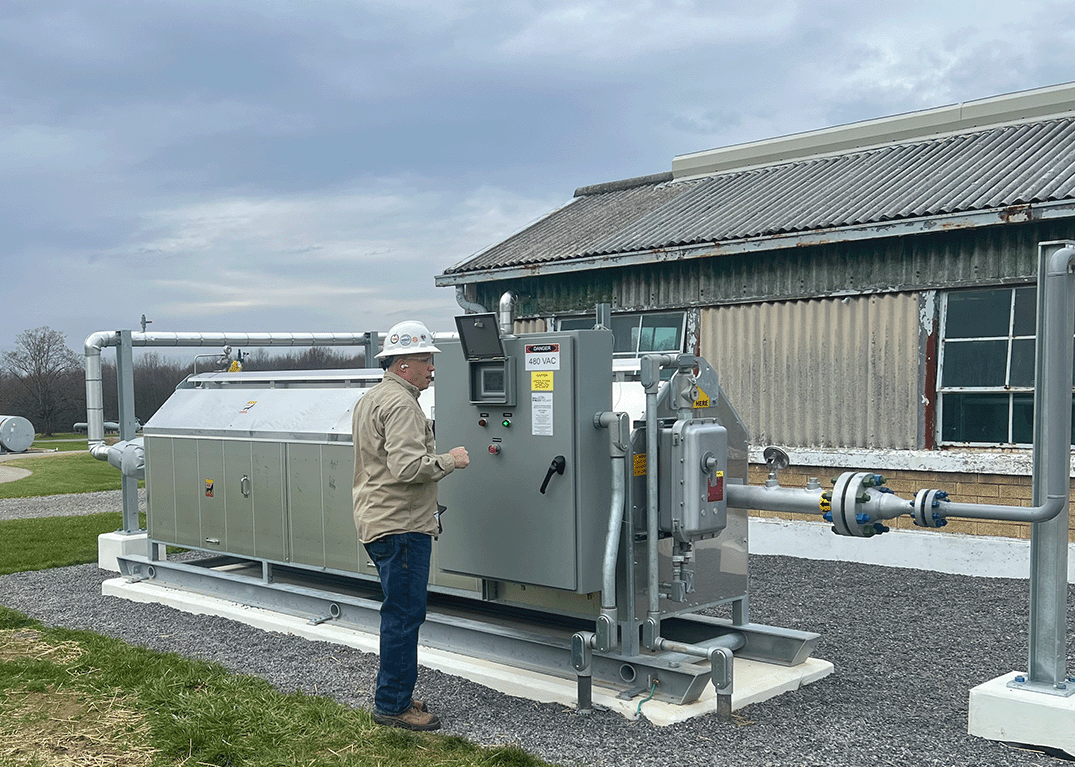
David Kerr fine tuning a HOTCAT that heats fuel gas to power large, reciprocating compressors.

Cody Smith troubleshooting a HOTCAT at a regulator station in Virginia.

Daryl Smith diagnosed that the 11 yr old HOTCAT needed new heater pads.
resources
Bruest Operations Guide
Bruest LDC Brochure
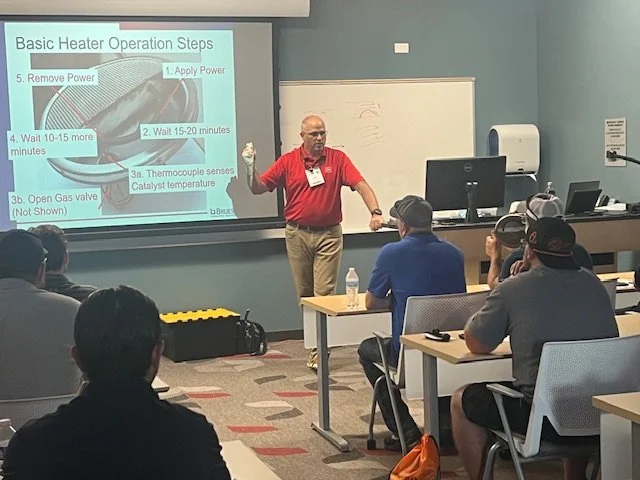
David Kerr teaching Bruest Heater Start Up and Operations
For Bruest Catalytic Heater support, training, maintenance or troubleshooting, connect with our Application Specialists.
MORE Applications for Catalytic Heaters
![FREEZ-FITER [S1800/4000]](https://images.squarespace-cdn.com/content/v1/574a1b41c6fc0859c442cae9/1706560928142-N3IOT1HPAMSSJIMCI3Y5/Freez-FITER_BRUEST.png)

Since 1952, Kerr Engineered Sales Company has represented leading pipeline and performance equipment manufacturers across the Eastern U.S. Now in its fourth generation of family leadership, Kerr continues to serve the industry with the same commitment to quality, reliability, and personal service that has defined our company for more than 73 years.
TDW FIRSTS: ISOLATION TOOLS & FITTINGS IN ACTION
To help a customer isolate a section of a gas pipeline being upgraded and replaced, TDW employed three new applications of its technology, along with the first use of ZEVAC® cross-compression equipment.
To help a customer isolate a section of a gas pipeline being upgraded and replaced, TDW employed three new applications of its technology, along with the first use of ZEVAC® cross-compression equipment.

Isolating the Lines

TDW ProStopp® DS Isolation Tool
An East Coast gas company needed to replace a section of bare steel pipe as part of their infrastructure upgrade program. They were also installing a new gas regulator station on the same project. The 3,200 foot section of 16” and 10” pipeline, needed to be replaced without shutting off service to any customers.
TDW recommended the use of Spherical 3-WAY Tees at both locations. With Stops set thru the Spherical Tees, the line could be isolated while gas was still allowed to travel thru the system thru the new permanent bypass that was welded between the outlet of the two spherical tees.
To isolate the section of pipe, TDW technicians deployed a 16” STOPPLE® Train, a patented system designed to isolate sections of pipeline for maintenance or repairs while the line remains in service. The STOPPLE® Train Isolation Machine uses double block and bleed technology, featuring two Sealing Cups with a bleed port between to ensure secure isolation.
For isolating the 10-inch line, TDW deployed the 10-inch ProStopp® DS Isolation Tool, which also uses double block and bleed technology with two hydraulically activated plugging heads.
Redirecting Gas Instead of Venting
Once the isolations were set on the 16-inch and 10-inch lines, the trapped gas between the isolated sections needed to be removed so that the line could be cut and capped. Rather than venting the gas into the atmosphere the traditional method, TDW technicians utilized a ZEVAC® (Zero Emission Vacuum and Compressor) Quad to extract the gas from the isolated section and redirect it back into the existing 16-inch line.
Gas utilities implement cross-compression technology like ZEVAC for methane emissions reduction during live gas operations.

ZEVAC® extracts gas from the isolated section and redirects it into the 16-inch line.
After depressurizing the line, the team secured the area overnight. Upon returning, they verified that the isolation seals were intact, providing a 100% shut-off. With no gas remaining, the utility safely cut out the old section and welded end caps. This permanently rerouted gas thru the spherical tees and into the new section of pipe.
Conditioning the Line

TDW TOR 3-WAY Tee Bypass
Another TDW first on this project, TDW’s new 2-inch THREAD-O-RING™ (TOR) 3-WAY™ Tee was used to build a bypass line between the new and old pipelines. The utility did this two weeks before the isolation, when they were conditioning (pickling) the line. Once the STOPPLE and the ProStopp were set, the TOR 3-WAY Tee Bypass was employed as the suction and discharge point for the ZEVAC® machine during line conditioning.
When the bypass was no longer needed, the TOR 3-Way™ Tee was isolated using TDW’s new Temporary Isolation Plug (TIP). Used for the first time on site, the TIP allowed the utility to safely decommission the outlet on the TOR 3-Way Tee. After both lines were capped off, the TOR Plugs were set in the TOR fittings, enabling the utility to complete the fittings.
Results
This complex isolation project was completed on schedule, allowing the utility to safely install the sections of pipeline without shutting off service to any customers. The new TDW technologies utilized in this project included:
TDW 10-inch ProStopp® DS Isolation Tool
TDW 2-inch THREAD-O-RING™ (TOR) 3-WAY™ Tee
TDW Temporary Isolation Plug (TIP)
Additionally, TDW technicians effectively operated a ZEVAC® Quad cross-compression unit to redirect about 25,000 scf of gas back into the 16-inch line, effectively reducing the utility’s methane emissions. The collaboration between TDW’s isolation tools and ZEVAC® marked a successful first use of these combined technologies.

Our application specialists at Kerr Engineered Sales Company are available for demonstrations, team presentations, lunch and learns and site visits. We are here to help you optimize your gas utility operations and ensure the safety and efficiency of your equipment.
Kerr Engineered Sales Company has been representing leading pipeline repair and performance companies in Eastern US since the company was founded in 1952. Seventy three years later, KERR remains a family business delivering the highest quality service and expertise.