
V-Jet Pig: Combatting Corrosion
TDW V-Jet® Corrosion Inhibitor Pig was engineered to address the challenge of Top of Line Corrosion. the V-Jet® pig takes a direct and efficient approach of redistributing inhibitor fluid where it’s needed most.
TDW PIGGING INSIGHTS - Episode 7
Top-of-line corrosion (TLC) remains a persistent issue in natural gas pipelines. By its nature, TLC is difficult to control because corrosion inhibitors tend to settle along the bottom of the pipe, leaving the uppermost portion of the pipe wall exposed and vulnerable. Over time, this uneven protection can lead to accelerated internal corrosion, integrity concerns, and increased maintenance costs.
How it Works: The TDW V-Jet® Pig
The TDW V-Jet® Corrosion Inhibitor Pig was engineered to address the challenge of TLC. Instead of relying on traditional methods that struggle to reach the top of the pipe, the V-Jet® pig takes a more direct and efficient approach by redistributing inhibitor fluid where it’s needed most.
The V-Jet® design is a series of strategically placed spray nozzles integrated into the scraper body. As the pig travels through the pipeline:
Corrosion inhibitor that has pooled at the bottom of the pipe is drawn into the pig through inlet ports
The system uses differential pressure to propel the pig forward
That same pressure is leveraged to redirect inhibitor fluid through the internal spray system
The inhibitor is then projected upward, coating the top of the pipe wall
This process is enhanced by a venturi effect created by the pig’s bypass design. The bypass flow acts as an accelerant, helping atomize and distribute the inhibitor more effectively across the upper internal surface.
Engineered for Simplicity and Reliability
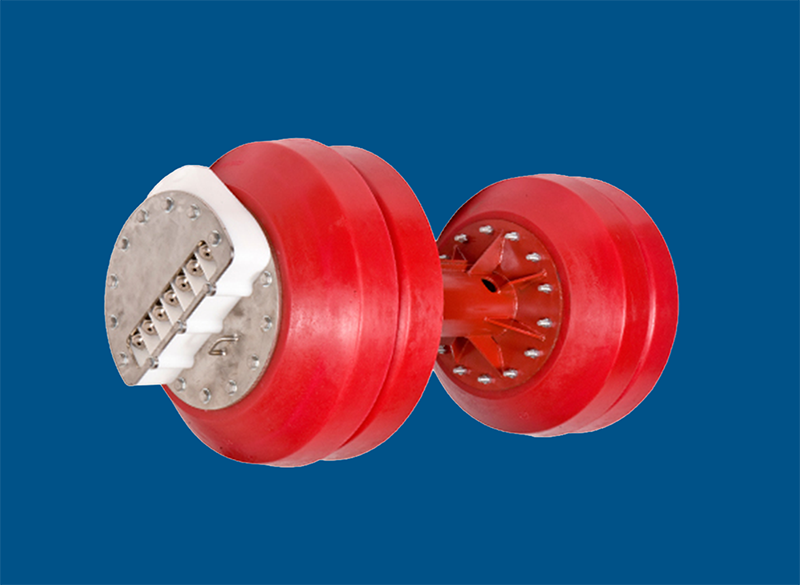
TDW V-Jet® Corrosion Inhibitor Pig
One of the strengths of the V-Jet® pig is its straightforward, field-proven design:
No moving parts
No onboard pressure vessels
No need for pre-charging or complex setup
That simplicity translates to reliability in the field and reduces operational complications during pigging runs.
The ability to consistently deliver corrosion inhibitors to the top of the line is a significant step forward in managing internal corrosion. The V-Jet® pig provides a practical, cost-effective way to improve inhibitor distribution without adding unnecessary complexity to operations.
Bottom Line
With the right tools, TLC can be managed effectively. The TDW V-Jet® Corrosion Inhibitor Pig offers a proven method to enhance protection where traditional approaches fall short.
To learn more about the TDW V-Jet® Corrosion Inhibitor Pig or to discuss your application, contact the KERR team.
The team of Application Specialists at Kerr Engineered Sales Company is available for presentations, product demonstrations, lunch and learns and customer visits.
TIPS TO CONSIDER WHEN PURCHASING CLOSURES
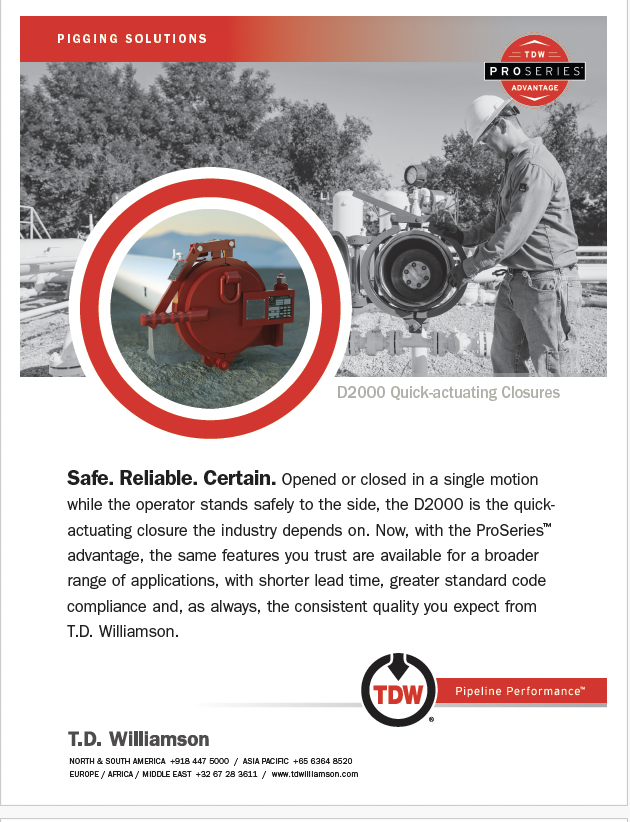
When selecting Closures, pipeline operators should consider safety and performance factors. The TDW D2000 Closures with the ProSeries™ Advantage is the safest, most trusted closure on the market.
“Imitation is the sincerest form of flattery that mediocrity can pay to greatness.”
Don’t compromise safety and performance by settling for imitations. When it comes to closures, cutting corners isn’t an option. The safety of your crews, the integrity of your pipeline, and the efficiency of your operation all hinge on choosing the right product.
TDW’s D2000 ProSeries closures are backed by more than 100 years of engineering expertise, field experience, and continuous innovation.
When you invest in the D2000 ProSeries, you’re not just buying a closure—you’re choosing the best-in-class solution backed by a manufacturer who will be here for the lifetime of your pipeline.
the manufacturer
Proven track record – Does the manufacturer have decades of field-proven reliability, or are they new to the market? TDW closures have been rigorously tested and trusted by operators worldwide for generations.
Life cycle support – A closure is only as good as its support. Look at availability of parts, repair services, and consumables like O-rings and Pressure Warning Locks (PWLs). TDW ensures long-term support for every component.
See the D2000 Closure in action
SAFETY FIRST

The primary question: Does the design keep the operator out of the danger zone?
Operator positioning – With the D2000, operators can safely open the closure from outside the direct line of danger.
Pressure Warning Locks – Placement matters. PWLs located in the 12 o’clock position are less likely to collect debris than those on the door face. The D2000 design directs any retained pressure safely away from the operator.

Durability and spares – Unlike metal-to-metal seals that wear out quickly, TDW’s PWLs are supported with readily available O-rings and replacement parts, ensuring reliability and uptime.
Design AND FEATURES that matter
Simplicity of operation – Fewer moving parts mean fewer failure points and easier maintenance.
Ease of alignment – A single pivot point makes aligning the door with the collar straightforward and efficient.
Clamping surface design – Closures with parallel, non-wedging clamp-rings eliminate force transfer to holding components, reducing wear compared to tapered, wedging surfaces.
O-Ring LOCATION and performance
Sealing performance is critical, and O-ring placement makes a big difference.

Protected placement – O-rings positioned on the external outer edge of the collar are less likely to be damaged during pig loading or removal, and they’re better protected from debris.
Leak prevention – Properly compressed O-rings perform even at low pressure, reducing leak risks.
Material options – TDW offers multiple O-ring materials to suit varying operating conditions, giving operators flexibility and reliability.
TDW closures are there for the lifetime of your pipeline.
DOWNLOAD CLOSURE BROCHURE
At Kerr Engineered Sales Company, we know closures inside and out. For over 73 years, we’ve been helping operators make the right decisions for pipeline safety and efficiency. As TDW’s representative since 1952, we stand firmly behind their products and their commitment to excellence.
CLOSING TDW D2000 CLOSURES
The D2000 quick-actuating closure combines operator safety with ease of operation. After depressurization, closing operations are performed in a fast, single motion. Here’s a quick guide to closing procedures.
TDW PIGGING INSIGHTS - Episode 6
A quick guide to closing and maintaining the D2000 Closure.

D2000 Quick-Actuating Closure
The D2000 quick-actuating closure combines operator safety with ease of operation. After depressurization, opening and closing operations are performed in a fast, single motion, with the operator standing safely to the side. The D2000 closure maximizes efficiency and reduces both, personal operator risk and company operational cost.
CLOSING PROCEDURES
Before closing, inspect, clean, and lubricate the O-Ring on the barrel collar, including the O Ring grooves and sealing surfaces
Push the door firmly shut with no gap between the door face and hub face.
Pull down on the clamp ring handle to close the door.
Install the pressure warning lock screw, make sure it is not cross threaded.
Hand tighten the pressure warning lock screw and then add about one eighth of a turn with a wrench. Do not over tighten.
MAINTENANCE TIPS TO BE DONE REGULARLY
Lubricate all the pivot point on top of the clamp ring assembly, front and back, as well as door hinge, top and bottom
Keep all the exterior surfaces painted to prevent rust
Other blogs you may be interested in:
If you have questions, please contact the Kerr Engineered Sales Company who are also available for team presentations, lunch and learns and customer visits.
OPENING TDW D2000 CLOSURES
The D2000 quick-actuating closure combines operator safety with ease of operation. After depressurization, opening and closing operations are performed in a fast, single motion. Here’s a quick guide to opening the closure.
TDW PIGGING INSIGHTS - Episode 5
A quick guide to opening and maintaining the D2000 Closure.
D2000 Quick-Actuating Closure
The D2000 quick-actuating closure combines operator safety with ease of operation. After depressurization, opening and closing operations are performed in a fast, single motion, with the operator standing safely to the side. The D2000 closure maximizes efficiency and reduces both, personal operator risk and company operational cost.
OPENING
To safely open the TDW D2000 clamp ring closure door, follow these procedures:
Isolate the vessel from line pressure, bleed the pressure to 0 psig and drain.
Always stand on the side of the closure that is opposite the door hinge.
Open the pressure warning lock by turning the screw counterclockwise. If there is still gas in the line, tighten pressure warning lock and continue to bleed pressure until 0 psig, then continue procedure again.
Inspect the pressure warning lock, O-Ring and the bushing.
Lift the clamp ring handle and put the pressure warning lock in the hole furthest to the right.
Clean and lubricate the interior surface of the clamp ring.
MAINTENANCE TIPS TO BE DONE REGULARLY
Lubricate all the pivot point on top of the clamp ring assembly, front and back, as well as door hinge, top and bottom
Keep all the exterior surfaces painted to prevent rust
Check out our Pig Resource page.
If you have questions, please contact the Kerr Engineered Sales Company who are also available for team presentations, lunch and learns and customer visits.