PIPES ACT 2020 Inspection & Maintenance
These mandates require pipeline owners and operators to update their inspection and maintenance plans in order to address eliminating hazardous leaks and minimizing the release of natural gas from their pipeline facilities.

The PHMSA PIPES ACT 2020 mandates pipeline owners and operators to update their inspection and maintenance plans in order to address eliminating hazardous leaks and minimizing the release of natural gas (including intentional venting during normal operations) from their pipeline facilities. The statute requires pipeline operators to complete updates and have plans in place.
Have you implemented the PIPES ACT 2020 into your operational procedures?
Are you implementing set plans to reduce emissions when carrying out pipeline maintenance and repair projects?
Kerr Engineered Sales Company represents manufactures with multiple proven solutions to reduce emissions and assist in leak detection and repair.
Reducing Emissions With GPT

GPT Monolithic Isolation Joint
With gaskets and joints, seal ability is key. The VCS-ID gasket constructed of Glass Reinforced Epoxy (GRE) and a 316SS, has a PTFE (polytetrefluoroethylene) inside diameter (ID) immediately seals the pipe bore preventing media from getting to the GRE. The GPT Monolithic Isolation Joints for below ground pipe applications gives a positive, leak proof block against the flow of electrical current in the piping system.
The EVOLUTION gasket eliminates GRE completely. It benefits from the addition of the PTFE ID giving unparalleled sealing tightness performance, ideal for emission reduction in pipeline connections.
BRUEST CATALYTIC HEATERS

Bruest HOTCAT heaters upgrade performance with reduced emissions
Bruest offers catalytic converters that convert hydrocarbon such as Methane, Propane, and Butane to carbon dioxide and water vapor. The Bruest technology leverages the conversion process and generates infrared heat to safely heat up natural gas instruments such as valves, regulators, instrument gas and cold temperature sensitive devices.
ZEVAC = Zero emission vacuum & compression
ZEVAC is an industry pioneer in gas and liquid recovery technology and the recognized leader in methane mitigation applications. ZEVAC is ideal for reducing emissions on planned repairs or maintenance. The technology uses compressed air to draw the pressure down on a section of the pipe and capture natural gas to be re-compressed into an adjacent pipeline.

ZEVAC uses compressed air to draw the pressure down on a section of the pipe and capture natural gas to be re-compressed into an adjacent pipeline.
Each unit has a pneumatic powered vacuum that suctions methane from any pipe/vessel that needs to be de-pressurized.The other side of the ZEVAC unit compresses the gas back up to pipeline pressure so it can be discharged to a nearby transmission or distribution pipe.
GAZOMAT GAZOSCAN METHANE LEAK DETECTION
GAZOMAT Gazoscan methane leak detection
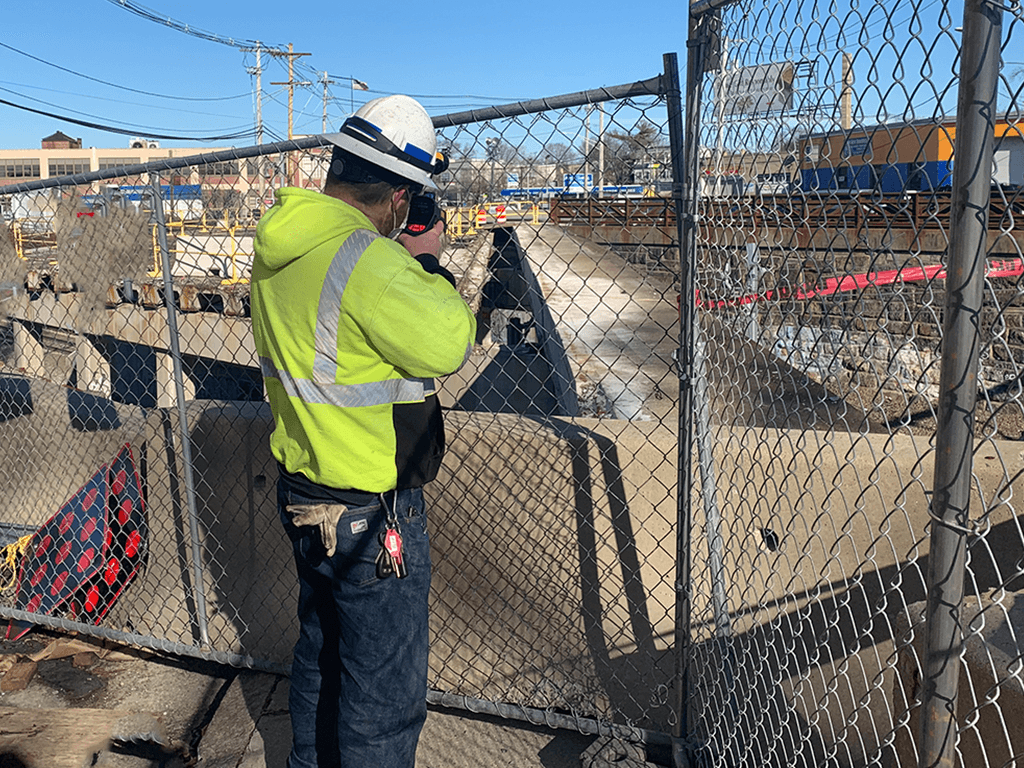
Using optical technologies, GAZOMAT detection equipment covers the entire field detection process, including high-speed inspection by car, leak detection on-foot, leak location and quantification, coupled with the newest data processing and GPS mapping tools.
TDW Pipeline maintenance

TDW STOPPLE® isolates a section of line for repairs while maintaining gas supply
T.D. Williamson hot tapping and plugging teams use world class technology to create safe work zones for pressurized pipeline maintenance, modification and repair. TDW in-line inspection (ILI) technologies are fully engineered to provide comprehensive threat assessment and to detect cracks and crack-like anomalies, corrosion and metal loss, dents and interacting threats.
To learn more, download the PHMSA Pipes Act guidelines below.
To discuss how Kerr can support your organization with PIPES ACT plans and implementation, contact us by email or phone at 1-800-245-3198.
Kerr Engineered Sales Company has been representing leading pipeline repair and performance companies in Eastern US since the company was founded in 1952. Seventy years later, the company is a third generation family run business serving customers with the highest quality service and support.
GPT Preventing Electrical Bridging in Pipeline Isolation Joints
These resources help Oil and Gas operators meet the increasing demands and conditions such as sour gas.


In today’s Oil and Gas industry, increasing demands and conditions have become commonplace and are only set to continue as operators maximize and improve efficiencies in their processes. The increase in sour gas is one such example. Increased sour gas percentages are being experienced across the globe, presenting unique challengers to pipeline operators.
Sour gas can interact with moisture in pipelines and the metallurgy in the pipe to create Iron Sulfide known as “black powder”, a conductive material that can bridge isolation joints.
CASE STUDY: Overcoming Electrical Bridging with EVOLUTION®
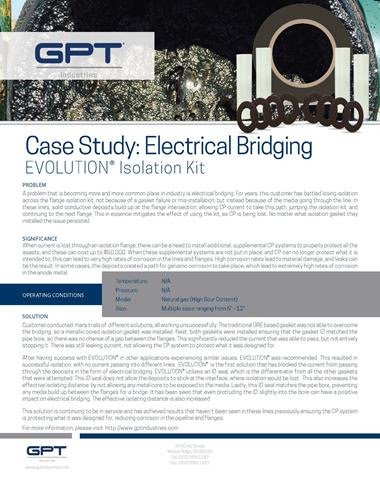
For years, this customer has battled losing isolation across the flange isolation kit, not because of a gasket failure or mis-installation, but instead because of the media going through the line. In these lines, solid conductive deposits build up at the flange intersection, allowing CP current to take this path, jumping the isolation kit, and continuing to the next flange. Download the case study.
Download case study
Troubleshooting Common Failures with Isolation Kits
This webinar provides a unique insight into the most common failure modes of isolation gaskets and how to avoid and overcome these issues. GPT's application engineering team is exposed to various challenges and issues faced by corrosion professionals. In this interactive discussion, two of the most common failure scenarios are reviewed.
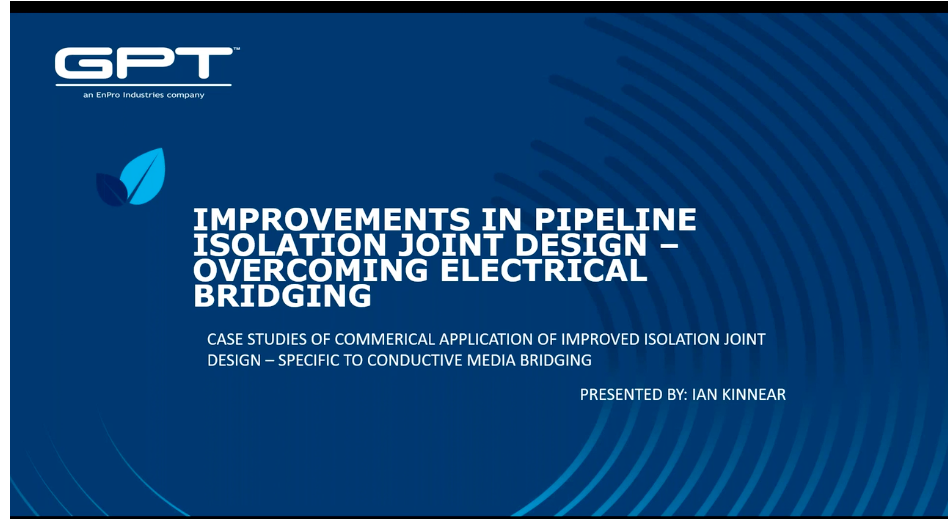
VIEW WEBINAR
ZEVAC - eliminate venting and blowdowns
The updated ZEVAC Twin is now lighter, faster and more versatile ideal for pigging to distribution operations. The updated ZEVAC Quad offers more versatility at different drawdown pressures.

ZEVAC is an innovation that helps operators eliminate venting and blowdowns and demonstrate meaningful progress toward NET ZERO targets.

Download ZEVAC TWIN SPECS
The updated ZEVAC Twin is now lighter, faster and more versatile.
The updated ZEVAC Quad offers more versatility at different drawdown pressures.

Download ZEVAC QUAD Specs
The team at Kerr is happy to assist you with ZEVAC and other products or solutions.
PHMSA Pipes ACT 2020 - Solutions
PHMSA Pipes ACT 2020 comes into effect Dec 27, 2021. Included within the act are new mandates for PHMSA that require operators to revise all plans to address elimination of hazardous leaks and minimize releases of natural gas. There are proven solutions that the KERR team can help you implement.

The PHMSA Pipes ACT 2020 focus is on eliminating hazardous leaks and emissions reduction and comes into effect on Dec 27, 2021.
What this means for pipeline operators is that they must:
Revise all plans to address elimination of hazardous leaks
Revise all plans to address minimization of releases of natural gas
Revise all plans to address replacement or remediation that are known to leak.
“
PHMSA will require that leak detection and repair programs consider the environment, the use of advance lead detection practices and technologies, and for operators to be able to locate and categorize all leaks that are hazardous to human safety, the environment, or can become hazardous. With regards to pending regulations, the new legislation would require PHMSA to publish Part 2 of the Transmission Rule within 90 days, and within 1 year review comments to the recent advance notice for proposed rulemaking on Class Location Changes. ”
2022 Inspection Cycle
PHMSA has indicated that the 2022 inspection cycle will contain questions related to compliance with the PIPES ACT requirements in Sect 114.
Emissions Reduction Specifics
Gas pipeline operators are required to eliminate hazardous leaks and minimize gas methane releases both planned and fugitive. Operators should evaluate the entirety of their program to ensure the minimization of methane releases.
Solutions for Reducing Emissions
ZEVAC® = Zero Emission Vacuum and Compressor. This revolutionary, patented technology uses compressed air to reduce emissions. Ideal for planned emissions, it is a pneumatic powered vacuum on one side that suctions methane from any pipe/vessel that needs to be de-pressurized. The other side the ZEVAC unit compresses the gas back up to pipeline pressure so it can be discharged to a nearby transmission, distribution pipe.

ZEVAC uses compressed air to draw the pressure down on a section of the pipe and capture natural gas to be re-compressed into an adjacent pipeline.
Bruest Catalytic Heaters are catalytic converters that convert hydrocarbon such as Methane, Propane, and Butane to carbon dioxide and water vapor. Bruest takes advantage of the fact that the conversion process also generates infrared heat to safely heat up natural gas instruments such as valves, regulators, instrument gas and cold temperature sensitive devices.
The catalytic heater panels convert the fuel gas to CO2, water vapor, and infrared heat with virtually no NOx in the process. Bruest also uses Catalytic Heaters to reduce methane emissions in the Fugitive Emission Digester. This unit uses a catalytic heater pad to catalyze methane from instrumentation that would usually bleed to atmosphere.
Bruest HOTCAT heaters upgrade performance with reduced emissions.
GPT Seal ability is key.
The VCS-ID gasket constructed of GRE and a 316SS, has a PTFE inside diameter (ID) it immediately seals the pipe bore preventing media from getting to the GRE. The EVOLUTION gasket eliminates GRE totally, it benefits from the addition of the PTFE ID giving unparalleled sealing tightness performance, ideal for emission reduction in pipeline connections.
The GPT Monolithic Isolation Joints (MIJ) for below ground pipe applications gives a positive, leak proof block against the flow of electrical current in the piping system. MIJs offer an alternative to buried flanges and are maintenance-free and long lasting block against the flow of electric current in all piping systems. MIJs eliminates the risk of failure due to improper field assembly of traditional flange components by providing a complete coated isolation system that simply requires two butt welds on either end of the joint for installation.
GPT Monolithic Isolation Joint
PIPES Act 2020 - Leak Specifics
Leak mitigation should be reviewed to ensure leaks are repaired as soon as possible and operators should consider increased leak detection patrols.
For liquid pipeline operators, the primary focus will be on the elimination of hazardous leaks through a comprehensive review of their lines.
Operators need to ensure their repair criteria is sufficient to prevent future leaks e.g. replacement versus sleeve. They need to determine segments of line that need to be remediated or repaired.
KERR Solutions for Leak Detection
Gazomat - Using optical technologies, GAZOMAT detection equipment covers the entire field detection process, including high-speed inspection by car, leak detection on-foot, leak location and quantification, coupled with the newest data processing and GPS mapping tools.
Gazomat Gazoscan methane leak detection
KERR SOLUTIONS FOR LEAK REPAIR AND EMISSION REDUCTION
TDW STOPPLE® isolates a section of line for repairs while maintaining gas supply.

TDW STOPPLE® isolates a section of line for repairs while maintaining gas supply
TDW - Hot tapping, STOPPLE®, SHORTSTOPP® and plugging teams use world class technology to create safe work zones for pressurized pipeline maintenance, modification and repair. Strategic use of a STOPPLE® or SHORTSTOPP® plugging device can effectively reduce the overall amount of gas to be blown or drawn down. This is done by isolating a much smaller section of line vs. blowing down a large section between two valves.
TDW in-line inspection (ILI) technologies are fully engineered to provide comprehensive threat assessment and to detect cracks and crack-like anomalies, corrosion and metal loss, dents and interacting threats.
Kerr Engineered Sales Company has represented leading pipeline repair and performance companies in Eastern US since it was founded by Art Kerr, Sr in 1952. They have been serving the industry for over 69 years with knowledge and expertise in natural gas, pipeline, industrial, water and power industries. From gas compressors or pipeline pigs to complex, fully integrated systems, Kerr delivers an exceptional level of expertise and service.