TDW ILI in Pipeline Under Cape Cod Bridge
As TDW Pipelines Services team recently proved on a project over Massachusetts’ Cape Cod Canal, there’s always a way to bring high challenges to a more manageable size. Ron Comer, Senior Application Specialist from Kerr Engineered Sales, facilitated this Boston bridge project.
Height makes managing the integrity of under-bridge pipelines complex and more difficult, with potential risk increasing inch-by-inch. When the bridge has an above-water clearance of 135 feet, accessibility may seem particularly daunting. As the TDW Pipelines Services team recently proved on a project over Massachusetts’ Cape Cod Canal, there’s always a way to break things down to a more manageable size.
As part of a structural integrity assessment, the operator of a 10-inch natural gas pipeline contracted TDW to clean and inspect a section affixed to the underside of a 1,408-foot bridge. The arch bridge carries foot, vehicular and bicycle traffic to the Cape Cod peninsula. The pipeline under it is one of three supplying the area, a popular vacation spot whose year-round population of about 215,000 more than doubles during the summer.

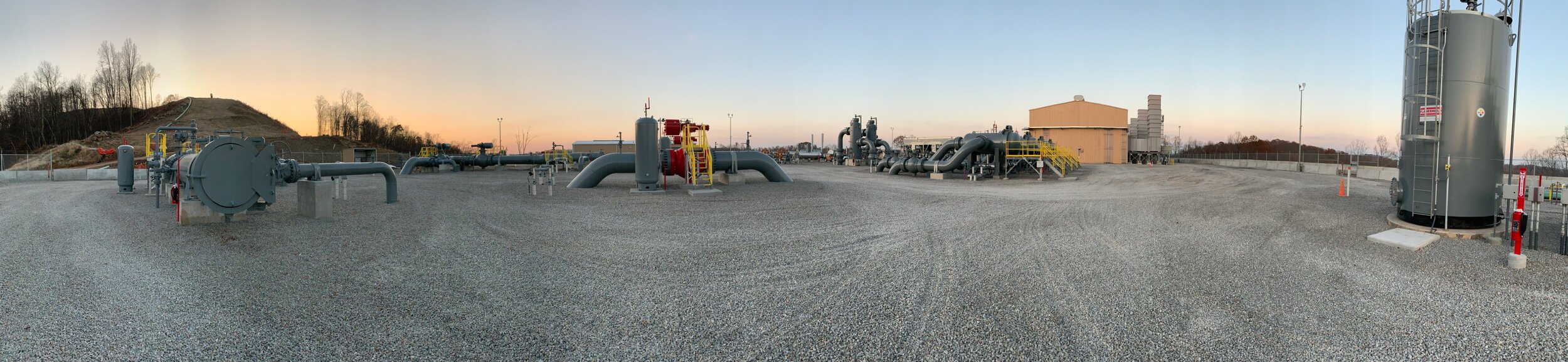
ILI tool being inserted into the pipeline under the bridge.
Because of the pipeline’s height, Pipeline Services couldn’t rely on typical equipment to launch and retrieve cleaning pigs or in-line inspection (ILI) tools. Instead, they employed a pull-through approach with wireline equipment. This method is frequently used for the controlled pigging of short segments such as water, highway or road crossings, for new pipe that hasn’t been connected into a system yet and for pipelines without launching and receiving equipment.
A Better Option
Height wasn’t the only challenge the operator and TDW had to consider. There was no access to insert or remove the cleaning pigs or in-line inspection (ILI) tools, and no way to install traps. Flow rate was another issue. Because the flow came from end-user demand on the line, there wasn’t much the operator could do to regulate the flow rate, which under normal circumstances, would keep the pigs and tools moving at optimal velocity.
To try to deal with these concerns, the operator initially considered using robotic remote- controlled ILI, but that idea was also fraught with problems. To reach the entry and exit points, the robot would have to make a 110-foot vertical climb on the inlet side. Not only did the vendor doubt the robot could pull itself straight upward, they were afraid that if the tool actually made it to the top it might make an uncontrolled drop on the descent. Direct inspection was also a thought, but that could be dangerous, expensive and time-consuming.
By contrast, the TDW wireline solution enabled the cleaning pigs and ILI tools to safely ascend into the pipeline and move through it at a regulated speed. The operation began with progressive pigging — a process of using increasingly aggressive cleaning pigs until cleanliness standards are met — to prepare the pipeline for good sensor contact during the ILI phase.
Safe, Successful Operation
According to Senior Field Technician Brandon Bolesky, who led the project, the first step was to provide entry and exit for the tools by removing a piece of pipe at each end of the section and replacing it with a blind flange with an attached valve. The cable from the wireline truck was attached to a tow pig in a disc cup disc cup (DCDC) configuration and pushed into the pipeline. Nitrogen pushed the tow pig through the line to the far end.
“We didn’t have a lot of information about the cleanliness of the line, so we started cleaning with zero expectations and adjusted as necessary, using increasingly aggressive pigs.”
After achieving the level of cleanliness required for a good ILI run, TDW ran a gauge pig to check for bore restrictions and then launched magnetic flux leakage (MFL) and deformation (DEF) technology in combination. Not only did the tools provide vital information about metal loss and out-of-roundness, dents and other geometric anomalies, running them together served a safety purpose: The MFL tool provided enough drag to prevent the possibility of it falling during descent.

Ron Comer, Senior Application Specialist from KERR Engineered Sales was the Application Specialist on this Boston project.
This article is reprinted from the October issue of Pigging industry News
Are you looking for an expert to help with pipeline inspection or cleaning?
Contact Kerr Engineered Sales at 800-245-3198 or sales@kerrengineeredsales.com to discuss your project
November 2020 TDW Training Complementary Webinars
For 100 years, TDW has developed many of the industry’s most skilled people, including field technicians. Rigorous hands-on training, classroom education and field audits qualifies them to meet the highest standards and requirements for quality, safety, health and the environment.
Anyone can attend these free training webinars starting November 4, 2020

For 100 years, TDW has developed many of the industry’s most skilled people, including field technicians. Rigorous hands-on training, classroom education and field audits qualifies them to meet the highest standards and requirements for quality, safety, health and the environment.
Anyone can attend these free training webinars. They are hosted through Microsoft Teams. The link is included in each session
Introduction to TDW Data Analysis
Details: Wednesday, November 4, 2020 @ 11:00 am ET
To Join: Join Microsoft Teams Meeting
+1 539-664-9698 United States, Tulsa (Toll)
Conference ID: 876 779 594#
TDW Field Operations - Technician Training and Certification
Details: Thursday, November 5, 2020 @ 11:00 am ET
To Join: Join Microsoft Teams Meeting
+1 539-664-9698 United States, Tulsa (Toll) Conference ID: 282 176 722#
Introduction to TDW Project Management
Details: Wednesday, November 11, 2020 @ 11:00 am ET
To Join: Join Microsoft Teams Meeting
+1 539-664-9698 United States, Tulsa (Toll)
Conference ID: 433 792 301#
TDW Interactive Report Software Demo
Details: Thursday, November 12, 2020 @ 11:00 am ET
To Join: Join Microsoft Teams Meeting
+1 539-664-9698 United States, Tulsa (Toll)
Conference ID: 374 758 828#
GPT EVOLUTION® Isolation Gasket
A new standard for the future of gasketing available from GPT Industries and Kerr Engineered Sales. Conditions are changing. As we drill deeper and utilize enhanced recovery methods such as thermal and CO2 injection, we are exposing the products in our pipelines to greater concentrations of harsh chemicals, higher temperatures and higher pressures. Maintaining pipeline integrity and keeping emissions in check has never been more important. Yet, traditional pipeline materials, including gaskets and seals, are not always up to the challenge.

Maintaining pipeline integrity and keeping emissions in check has never been more important.
As we drill deeper and utilize enhanced recovery methods such as thermal and CO2 injection, we are exposing the products in our pipelines to greater concentrations of harsh chemicals, higher temperatures and higher pressures. Traditional pipeline materials, including gaskets and seals, are not always up to the challenge.
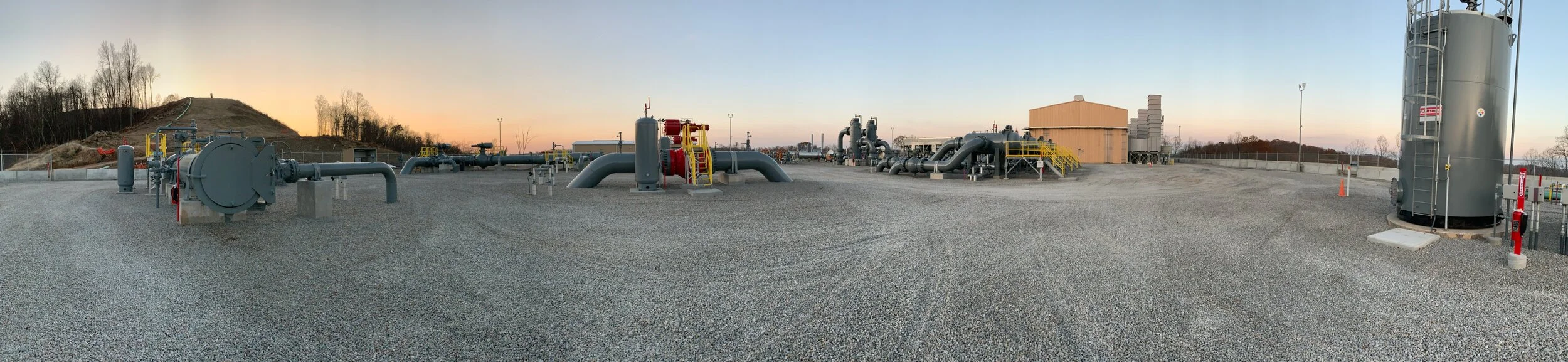
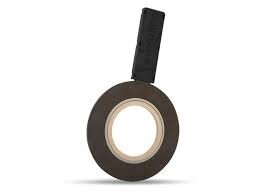
The Evolution® is a fully-encapsulated isolation gasket that delivers the impermeable performance needed to prepare any flange for the increasing risks found in today’s oil and gas industry. The thinner, 1/8” (3mm) design minimizes the difficulties often encountered while attempting to install thicker isolating gaskets. The total encapsulation allows the gasket to be hydro-tested and kept in the pipeline with virtually no loss in isolation properties. No longer do you have the permeation issues or chemical attack that plagues GRE gaskets. This innovative gasket is coated using a GPT proprietary material designed specifically for the oil and gas industry that is extremely abrasion and impact resistant.
GPT Evolution Gasket
Product Highlights
Passed API 6FB fire testing in multiple sizes and pressure classes and has a considerable increase in operating temperature over GRE products
Revolutionary materials and design provides industry-leading resistance to leakage and flange corrosion, as well as unprecedented levels of fire safety
Rated to 500°F (260°C)*, EVOLUTION® can also operate under high temperatures